Building a Community Response to Youth Homelessness
Building a Community Response to Youth Homelessness
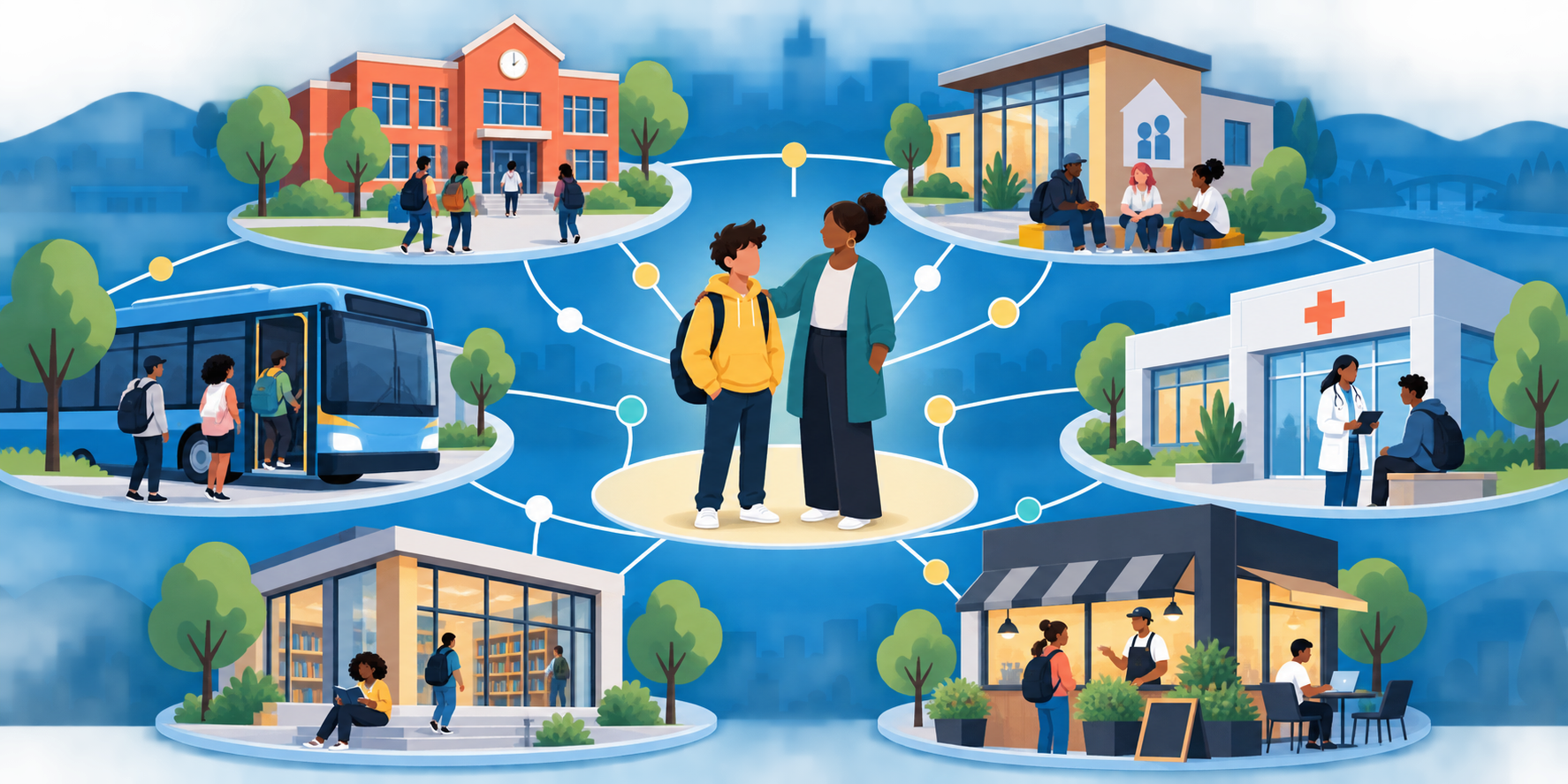
No single organization can address every factor connected to youth homelessness. Young people move through schools, neighborhoods, transportation systems, workplaces, health services, and community spaces. A coordinated response meets them across those settings.
Map available support
Identify shelter, drop-in, behavioral health, family support, education, employment, legal, health, and crisis resources. Note eligibility, hours, transportation, language access, and referral procedures.
Clarify partner roles
Schools may identify warning signs. Libraries and businesses may offer accessible locations. Transit partners may help youth reach safety. Youth-service organizations can coordinate assessment and ongoing support.
Create simple referral pathways
Partners need clear instructions that can be followed during real situations. Provide one primary contact, after-hours guidance, confidentiality expectations, and steps for immediate danger.
Practice the response
Use brief scenarios to test whether partners understand what to do. Debrief gaps and update contact information regularly.
A strong community response is not measured only by the number of participating organizations. It is measured by whether a young person can find help quickly, be treated with dignity, and move from immediate safety toward lasting support.
Practice the response
Preventing youth homelessness requires more than the work of any one organization. It depends on a coordinated community response that helps young people find support early and ensures the organizations serving them have the knowledge, resources, and partnerships they need.
National Safe Place, Inc. supports both sides of that response. Safe Place® creates accessible pathways that connect young people with immediate help and safety. The Community™ strengthens youth- and family-serving organizations by connecting professionals with resources, learning opportunities, guidance, and one another.
Together with schools, shelters, libraries, transportation providers, businesses, healthcare professionals, law enforcement, families, and other community partners, these efforts help build a stronger safety net. When young people know where to turn and organizations are prepared to respond, communities are better equipped to prevent crises, address housing instability, and help all young people remain safe and supported.
Resources